Interview with Ankita: An Indian postdoc in Denver

Profile

Ankita Arora

Postdoctoral Research Fellow

University of Colorado Anschutz Medical Campus, Aurora, Colorado, USA

Experience Timeline

  • 2010 - 2015

    Doctor of Philosophy (PhD), Biochemistry and Molecular Biology

    Heidelberg University, Germany

    Germany Flag

  • Postdoctoral Fellow

    University of California San Francisco (UCSF), USA

    USA Flag

    2016 - 2017

  • 2018 - Present

    Postdoctoral Research Fellow

    University of Colorado Anschutz Medical Campus, USA

    USA Flag

Table of Content

Interview – Questions and Answers

1 – Tell us about yourself

I, Ankita Arora am currently working as a postdoctoral fellow at University of Colorado-Denver, Anschutz medical campus.

I was born and raised in New Delhi, India where I finished my undergraduate studies in Biomedical Sciences. Then, I moved to Mumbai to pursue my masters in Biotechnology at IIT-Bombay. I graduated from University of Heidelberg, Germany, which was a great learning experience and exposure. In order to get more international exposure and gain expertise, I decided to move to US and did a short postdoc at University of California-San Francisco, which ended prematurely due to unfortunate circumstances.

Since my undergraduate studies I have been interested in the ever-expanding field of RNA biology. I have explored various aspects of RNA regulation from transcription initiation to translation and am currently expanding my horizons to RNA localization.

Moving to USA

2 – How long have you been in USA?

2.5 years

3 – Why did you decide to move to USA for your postdoc?

There was a variety of reasons that made me decide to move to US, namely:

  • International scientific exposure,
  • Learning different cultures and exploring USA,
  • Family reasons as my brother is working in US as well.

4 – What difficulties (if any) have you encountered when moving to USA (Visa, Housing…)?

US have been great in welcoming international scholars. However few of the difficulties I faced were:

  • It was a pain to find a housing in San Francisco in your budget. It gets especially hard in major cities like New York, San Francisco, and Seattle etc.

Note from PostdocInUSA:

Check our interview with Morgane Boone, postdoc at UCSF, to read about solutions regarding Housing near UCSF campus.

  • Be prepared to pay higher rents and share apartments.
  • Also, as a newbie in US, it’s hard to get loans for cars or develop a credit history early for credit check by renters.
Credit Score

Credit History

Credit scores are used by lenders (banks, credit card companies, car dealerships…) to make decisions about whether or not to offer you credit, and under which terms (interest rate, down payment…).

It is also used as a decision-making tool in many life events in the USA, like renting an apartment, opening a bank account or getting a cell phone plan.

A major hassle that face all international postdocs arriving in the US is that they do not have a credit history, and thus their credit score is equal to zero.

Thus, you will need to build your credit history from scratch as soon as possible!

5 – Was it hard to get a visa?

Most of the visa formalities were taken care by the International Scholars Office at UCSF. However, I would recommend being cautious while answering to question at the consulate. Be as generic as you can and avoid scientific terms that the consulate officer can’t understand. Saying that, keep in mind that the whole visa process at an average will take 3-4 months until completion.

6 – Where are you living now?

I live in Denver, Colorado.

1
US States
1

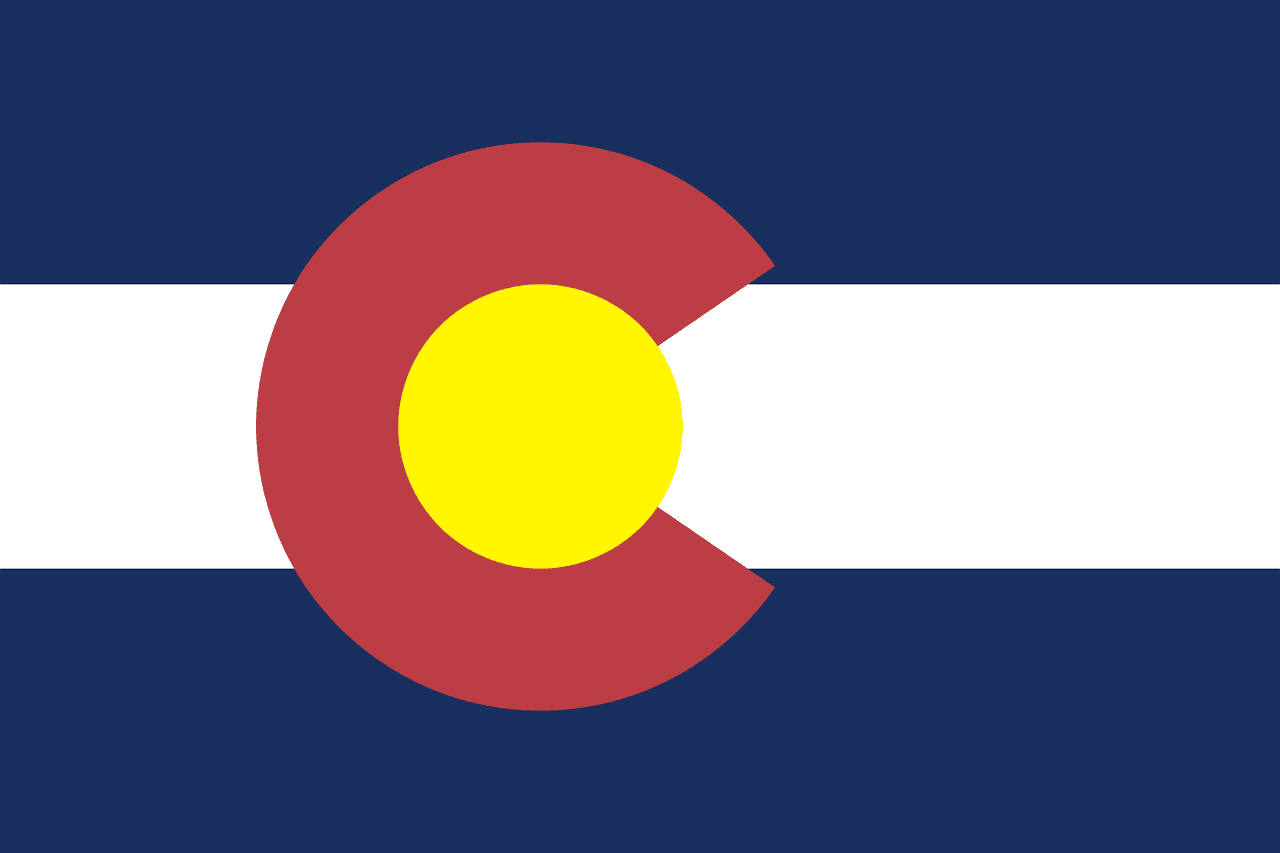
Denver

The capital and most populous city of Colorado state.

Flag of Colorado

The state was named for the Colorado river, and encompasses most of the southern Rocky Mountains.

Colorado became a state one century after the signing of the United States Declaration of Independence, and for this reason is nicknamed the “Centennial State“.

Living in USA

7 – How did you find the transition to living in USA?

It was a fairly smooth curve for me to transition to USA. This was I had travelled to US before as a visitor to visit my brother multiple times. I would recommend being in contact with an acquaintance and/or friend before you arrive. There are several groups on social media like Facebook or university sites that you could get in touch in advance.

8 – Did you experience any culture shock?

I was transitioning from Germany to US, so didn’t experience any culture shock. However, it could be a big change if you’re transitioning from India.

A helpful tip: Be on time for your appointments.

9 – Was it easy meeting new people / making friends?

Yes, San Francisco being an international city it was easy meeting new people and making friends. Also, most of the universities have International Scholars offices, which run social events for networking. I would highly recommend attending those events. It’s a great place to make new friends.

10 – What do you enjoy most about living in USA?

In addition to my love for science, I’m highly passionate about travelling. US being such a vast nation provide ample opportunities to explore various landscapes and geographical wonders. I’m a big fan of National Parks in US. Also, I love that US is a mix bag of cultures with a lot of diversity and international exposure.

11 – What do you enjoy least about living in USA?

Apart from the obvious fact, that I would still like to be closer to my home and family I believe that health care in US definitely needs improvements and is a bit on the expensive end. Additionally, I wish that USA had a better public transportation system. As for now it is very heavily dependent on driving personal cars especially if you’re not residing in big cities like New York.

US Health Care System - Doctor

US Health Care system

The United States spends more on health care than any other country in the world, and more than twice the average among developed countries (18% of GDP).

The cost of health care has raised year over year, reaching an annual cost of $11,559 per person in 2019.

Even with all that spending, the World Health Organization ranked the U.S. 37th in healthcare systems, and The Commonwealth Fund ranked the U.S. last among the top 11 industrialized countries on overall healthcare.

12 – What is the most striking experience or best moment you have had in USA so far?

I would say exploring the vast geographical landscapes and visiting the national parks from Yosemite to Grand Canyon to Yellowstone National Parks has been my best moments. They bring you closer to nature and experience it at it’s best. Watching wildlife (saw a grizzly bear feeding on a carcass) and the numerous bisons at Yellowstone was par excellence.

U.S. National Parks

The United States has 419 national park sites covering more than 84 million acres across all U.S. states and territories.

The National Park System is comprised of 20 national park types that are operated by the National Park Service. Among them, one type of parks include “National Park” as part of their proper name.

The United States has 62 national parks, including world-renowned Great Smoky Mountains, Grand Canyon, Rocky Mountain, Zion, Yosemite and Yellowstone as Top 6 visited parks in 2019.

Yellowstone National Park USA

Working as a postdoc in USA

13 – How did you pick your postdoc research laboratory?

I was interested in the field of RNA biology and was looking for labs with good record and an international environment. Additionally, wanted to be with a group of creative, innovative and passionate colleagues who would help me grow as a person and a researcher. I found a couple of labs that fit my criteria, wrote them emails and eventually interviewed for a few of them. I was extremely happy to join Weinberg lab at UCSF for my first postdoc (the lab is no longer active) and then found a perfect match at Taliaferro lab at University of Colorado-Anschutz Medical campus.

14 – How would you describe the work culture/environment in research labs in USA? Is it different from your home country or others you had experience in?

Each lab tends to reflect the work culture of the nation it’s geographically located in, saying that it depends on each lab individual too. I feel that the labs in USA are intellectually more stimulating (more brainstorming sessions with your PI and discussions with your peer) and more open to taking high risks projects. Also, the labs in US give you more scientific freedom to explore the unknown and are accepting that you might fail in the pursuit. Socially, back in India lab mates tend to venture into lunch and/or snack breaks together. Here in USA that’s culturally less common but they are equally friendly and understanding and great fun to hang out with in a non-work environment.

15 – How does research in USA compare to your home country or other experiences you may have from other countries?

I feel that the research in USA is more competitive and more market-driven than back in India.

Cultural differences between USA – Home country

16 – What do you miss the most from your home country or last country you lived in?

Besides my family and friends, I miss the spicy street food and the freedom to go out and eat even at the odd hours of the night. Additionally, I miss attending the Indian festivities especially during the festive season of Diwali (festival of lights).

Diwali Festival India

Diwali Festive Season

Diwali, or Dipawali, is the biggest holiday of the year in India.

This Hindu festival gets its name from the “row of lighted lamps” that Indians light outside their homes to symbolize the victory of light over darkness, good over evil.

The festival of lights is celebrated for 5 days in October or November each year.

17 – What custom/habits do you find most surprising about USA?

I found it surprising that the taxes and or tips aren’t included in the bill and have to add in extra. It took some time to get adjusted to it but eventually I did. Another aspect, which wasn’t surprising but had a hard time adjusting to, is not using the metric system.

U.S. Customary System

The United States is one of only three countries in the world that does not use the International System of Units or metric system as its predominant system of measurement. The others being Liberia and Myanmar.

Unit of Measure

Metric UnitsCustomary Units
1 centimeter0.394 inch
1 meter3.281 feet
or 1.093 yards
1 kilometer0.621 mile
1 gram0.035 ounce
1 kilogram2.205 pounds
1 milliliter0.034 fluid ounce
1 liter1.057 quart
or 0.264 gallon
1 degree Celsius9/5 (°C) + 32 = 33.8 degrees Fahrenheit

18 – Has anything funny happened to you due to cultural differences?

No. I believe that USA has so many Indian working here that they have become accustomed to cultural differences.

19 – What are the biggest differences between everyday life in your home country and USA?

In India, travelling takes a huge toll in your daily life due to more people and traffic. In USA, due to less travel times one gets more self and family time after the workday is over.

20 – Tell us about anything in USA that you wished exist/be more implemented in your home country, and vice versa?

I believe labs in India should be more accepting of failures and give some intellectual freedom to the students and postdocs. Socially, they should learn the importance of time and be punctual for appointments.

21 – Are there any stereotypes/cliché you may have heard about your home country?

Hahahaha… They are so many that it’s hard to decide where to start. From the land of snake charmers to finding elephants/cows on the roads to arrange marriages being forced to everyone in India speaks Hindi. They definitely are good small talk topics for discussions and help to break the ice.

Tips to future postdocs in USA

22 – What advice/tips would you give to international PhD students thinking to move to USA for a postdoc?

I would recommend to be highly focused on your research and expanding your skill sets but at the same time try to socialize and build your network. Part of reason to go international is also to learn and adapt from different cultures.

23 – Is there something that you wish you’d known before moving to USA?

Not really…

24 – How beneficial you think a postdoc in USA is for your career?

I believe it’s always good to have an international scientific exposure for your career. I have expanded my technical skillset, have a deeper understanding of my research, and realized that there’s always more than one way to answer a research question. Individually, I have increased my critical analysis skills, which help to design experiments in an efficient way. Lastly, I have developed more networks both in academia and industry, which might be beneficial for my future goals.

25 – What are your future plans?

I’m planning to stay here in Denver for few years to complete my project and delving into the unknown. In longer term, I wish to stay in RNA biology research preferably in academia but am open to industry as well.

0 replies

Leave a Reply

Want to join the discussion?
Feel free to contribute!

Leave a Reply

Your email address will not be published. Required fields are marked *