Interview with Dorothea: A German postdoc in San Diego

Profile

Dorothea Portius

Postdoctoral Researcher

Sanford Burnham Prebys Medical Discovery Institute, La Jolla, California, USA

Experience Timeline

  • 2012 - 2017

    Doctor of Philosophy (PhD), Biologly, NAFLD and metabolic diseases

    Université de Genève, Switzerland
    Switzerland Flag

  • Postdoctoral Researcher

    Salk Institute for Biological Studies, USA

    USA Flag

    2017 - 2019

  • 2019 - Present

    Postdoctoral Researcher

    Sanford Burnham Prebys Medical Discovery Institute, USA

    USA Flag

Table of Content

Interview – Questions and Answers

1 – Tell us about yourself

I am Dorothea Portius. I am German and since ~8 years I live outside of Germany.

Master Thesis in my home-country, Germany

I studied Nutritional Sciences/Medicine at the Martin-Luther University Halle-Wittenberg and the Technical University Munich. During my studies, I got interested in medical research and I was thinking to do my PhD.

I performed my Master Thesis in a lab working on diabetes and obesity in Munich. My supervisor suggested me to write my thesis in English in order to apply for a PhD position outside of Europe. So I did!

My PhD in Switzerland

I had my first interview in Geneva, Switzerland. The research topic, the lab and the PI gave me good impression. Although, it was my first job interview in English and I just took it as a kind of “practive”, two days after the interview I received a “YES”.

I moved to Geneva. It was an interesting time. Not only I got to know my limits as a graduate working on a huge research project (including a demanding boss), but I also learned how to work and to live in an international environment.

It was interesting to learn about the perspectives of other cultures, about the economy, the world and their daily habits. It is interesting how it changed certain personal perspectives and extended my way of thinking. I made really good friends in Geneva; it was an incredible experience.

My Postdocs in USA

At the end of my PhD, when I was thinking about my next steps, I was not sure what to do. I heed the advice of an old professor in Geneva and joined the Salk Institute for Biological Sciences in California (San Diego) as a PostDoc. After two years there, I needed some changes and another PostDoc possibility opened up at another Institute in San Diego, the Sanford Burnham Prebys Medical Discovery Institute.

Moving to USA

2 – How long have you been in USA?

This is now my 4th year in USA.

3 – Why did you decide to move to USA for your postdoc?

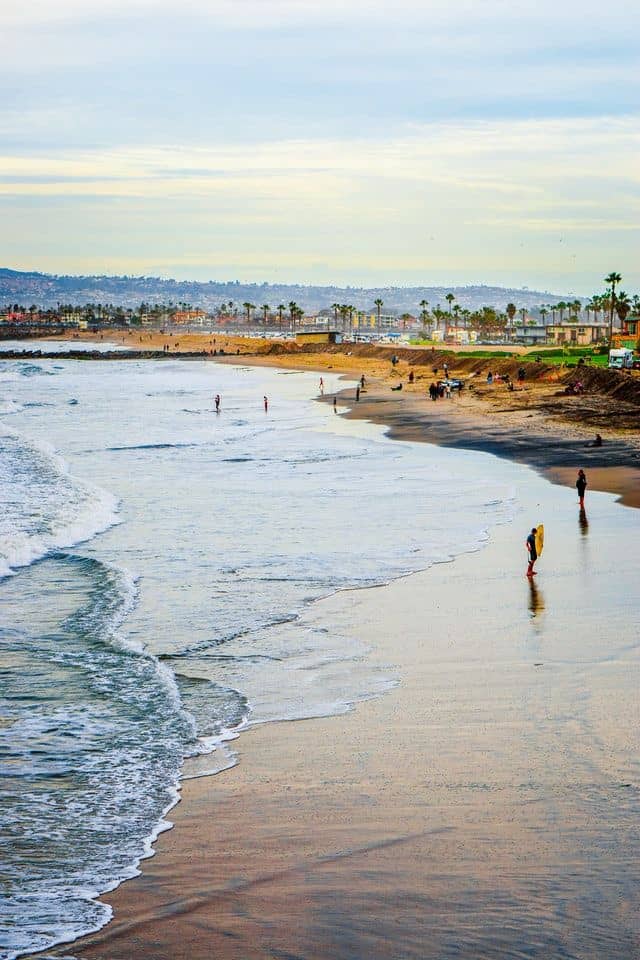
Ocean Beach San Diego California

Ocean Beach, San Diego, California, USA

Actually, USA was never attractive to me as a place to live. Although the nature is stunning, I thought the “typical” American life style is not compatible with mine.

In the end of my PhD, I was thinking about my next steps, I was not sure what to do. On one hand, I wanted to quit academia, but on the other hand, I didn’t want to stay in Switzerland and I didn’t want to go back to Germany. I actually wanted to leave the European continent. An experienced scientific advisor at my research department in Geneva suggested me few labs abroad. One of the labs was the Salk Institute for biological sciences in San Diego, California.

Coincidently, a friend asked me to join her on a trip to San Diego. She had a job interview there. Since, I didn’t take any vacation that year, I decided to join her. I contacted that lab at the Salk and introduced myself. The PI wrote me back saying that he has an open PostDoc position and he would like to invite me for an official job interview. I was flying to San Diego, I did my job interview, I used this one week to discover the city and South California and I cleared up all my “US” misconceptions. I felt in love, with South California and the lifestyle. South California is different.

One week after my interview, I got the “We would like to have you in our team” message. Without thinking long about it, I accepted the offer.

4 – What difficulties (if any) have you encountered when moving to USA (Visa, Housing…)?

The Visa was not an issue. The Institute took care of all the paper work, you just need to fill out the administrative forms and sign.

I think more challenging is the “financial” aspect and the “finding housing” part. At the beginning you don’t have a social security number, which is required for everything you want buy or rent. In addition, you don’t have a credit record, meaning you can’t get a credit to buy a car or other things with higher value. That is definitely something to consider.

In particular, you need a car in South California. There is almost no public transport, buses are running not frequently and you lose a lot of time going from A to B. You need a car on the West Coast.

Secondly, the housing is expensive. The PostDoc salary is not a lot and housing prices are increasing steadily. If you want to live in a “good” spot, you need to pay. At the beginning, I lived alone in a 1-bedroom apartment. I loved it, after sharing apartments my whole twenties, it was time to have my own space. Soon, I realized I cannot proceed like this financially. Each month my money was gone. I also want to enjoy my life, traveling, going out etc.

Finally, I needed to move in a shared apartment again.

How to get a Social Security Number?

Check our article about Social Security Number (SSN) and how to get one.

5 – Was it hard to get a visa?

No, the institution takes care of everything. The paper and administrative things are easy to handle.

6 – Where are you living now?

I am living in San Diego, South California. (5min walking to beach 😉)

1
US States
1

San Diego

 San Diego is the second largest city in California state.

Flag of California

California is the most populous state in USA, and it is the 5th largest economy in the world.

San Diego is known as “America’s Finest City”, famous for its warm climate, beaches and parks. It is located only 15 miles from the border of Mexico.

Living in USA

7 – How did you find the transition to living in USA?

Well, I think it depends strongly where you live in US. This country is so diverse from the culture, way of living, lifestyle and dynamic (including food choices, sports etc).

As I wrote in my answer of Question 3, I knew I would easily adapt to the lifestyle in South California. I am an active and social person; San Diego is a perfect spot for this. You can surf, hike, run, do yoga, even skiing is possible in California. 😉

The people are open-minded, easy-going and happy (I think it is due to the sun).

8 – Did you experience any culture shock?

No, I did not experience a culture shock. There were just few things I needed to learn, which are different and weird to me including bank system, health and social system.

I needed to adapt that there is no online banking. To my opinion, the bank system is still really old-fashioned in US. Checks are still widely used and I needed to learn the different kind of checks and when and how to use them.

In addition, people barely pay cash, everything is payed (even things with low value) by credit card. However, the credit card system is not secure at all, mostly you don’t need a pin and there is no limit. That is also the reason, why Americans owe nearly $1 trillion in credit card debt. Incredible…

9 – Was it easy meeting new people / making friends?

Yes, South California has also a big international community. It makes it easy to adapt and to make new friends. In addition, several networking events are happening each week in bars, breweries and other locations. You can meet interesting people from PostDoc’s, Industry Scientists, Managers from the industries and so on.

There is a big life science community in San Diego.

You can find out about those events at websites from women-in-bio South California, the life-science association Biocom, San Diego Entrepreneur Exchange SDEE, and many others.

10 – What do you enjoy most about living in USA?

I enjoy South California. I definitely love the outdoor life. At least once per month, I go hiking and camping with friends. I love the walk on beaches. I like the food here, a lot of fish, fresh veggies and a lot of avocados (thanks to Mexico).

Beach Sunset Crystal Pier San Diego

Beach Sunset, Crystal Pier, San Diego, CA

11 – What do you enjoy least about living in USA?

With time you realize that the friendships are not that deep than in Europe. Although you meet incredible and kind persons, but everything is quite superficial.

Another aspect is the social and health security. We are kind of lucky to have health insurance via the academic research Institutes. If you lose your job, there is no system which will support you.

12 – What is the most striking experience or best moment you have had in USA so far?

Oh, there are several. Every time I go out in the wilderness, I am impressed. Each National Park is so different. You cannot get enough of traveling and discovering here. Just in California you have beaches, big mountains, cities, different National Parks, nice wine regions, lakes and so on…it definitely doesn’t get boring.

Sunset Cliffs Natural Park San Diego

Sunset Cliffs Natural Park, San Diego, CA

I also got into camping here. It is the ultimate outdoor experience to backpack with your tent through the nature, camp in the wilderness knowing that there are rattle snakes, bears, mountain lions making it really exciting.

I was always a passionate runner in Europe, but here I get to know different challenges including trail running. If you are a runner, you definitely need to check out the Ragnar races. That are 24h trail-marathons. You don’t run a full marathon; it is a relay with a team of 8 people. In the end everybody runs 3 different loops with a total distance of a half-marathon. Those races usually take place in National Parks. You camp in the nature and enjoy the time with your friends and other running enthusiasts. It is really an incredible adventure.

Working as a postdoc in USA

13 – How did you pick your postdoc research laboratory?

I already described it before. A scientific advisor, which is well-known in the diabetes world, suggested me this lab in San Diego.

14 – How would you describe the work culture/environment in research labs in USA? Is it different from your home country or others you had experience in?

I think it really depends on the lab and the PI. I did not see any differences between labs in US and labs in Europe. Actually, my PI in Europe was much more demanding than my PI’s here in US. A major difference though is the funding. I think labs are better funded here than in Europe. This is mainly due to the fact that Institutions obtain a lot of money from private donors. If you work in a reputable Institute, you will have no limitations to obtain proper research resources.

15 – How does research in USA compare to your home country or other experiences you may have from other countries?

As I answered in the question before, I think there are no major differences. I think it really depends on the lab and PI.

Cultural differences between USA – Home country

16 – What do you miss the most from your home country or last country you lived in?

German Bread

Haha… that is a good question, most people ask me this.

Well, I already was complaining about this in Switzerland, but in USA it is even worse….good BREAD.

Yep, we Germans know how to make a bread which is crunchy and just contains yeast, flour and water. 😉

17 – What custom/habits do you find most surprising about USA?

South Californians are early risers. I am also a morning person, but I was surprised to see at 6am in the morning people running along the beach, surfing, walking their dog etc.

Another custom, I actually really appreciate is that shops are open 7-days from morning to evening. I don’t need to worry to run to the groceries.

18 – Has anything funny happened to you due to cultural differences?

Let me think, oh yes at the beginning several funny things happened.

My first week, I had a rental car and was standing on a RED traffic light with the intention to turn right. The car behind me started horning and the driver looked really angry. I didn’t understand, because it was RED. Telling this story to my American friend, he started laughing, telling me that I am allowed to turn right while there is a red light.

Another funny or “typical American thing”; I wanted to get some cash and I went to the bank. I went to the machine located outside the bank building. While I was standing there waiting for my cash, a car approached me and the driver looked suspiciously at me. He waited next/behind me sitting in his car. After I got my money and went back to my car, I saw that it was a drive-through cash machine. So typical American 😉

Turn On Red

In the United States, it is allowed to make right turns on red in all 50 states since 1980, except where prohibited by a sign or where right turns are controlled by dedicated traffic lights.

As one exception, it is illegal to turn on red in New York City, unless a sign indicates otherwise.

Red Signal Light Wall Street NY

19 – What are the biggest differences between everyday life in your home country and USA?

The biggest differences are the times, the day starts much earlier here.

Another big difference is the typical “South Californian” behavior. People want to small talk all the time. While we Europeans (i.p. Germans or Swiss) are more distanced and avoid conversations with strangers, South Californians chat with you on the street, in cafes, in the supermarket ….

If you want to get something quickly from the supermarket, because you are tired, hungry and it is late; forget it, the cashier asks you how your day was or what are your plans for the evening. That is something you need to get used to. I think I easily adapted to that behavior, because going back to Europe I realized how distanced people can be.

20 – Tell us about anything in USA that you wished exist/be more implemented in your home country, and vice versa?

Good questions, I think Europeans could be a bit more open-minded and talkative. US people can talk and brand themselves so well, that they are able to convince you for everything.

Europeans are more critical and afraid to over-advertise themselves. I think we could implement a bit more of this attitude, a lot of people would benefit from it.

21 – Are there any stereotypes/cliché you may have heard about your home country?

Hahah…oh yeah a lot and I am the perfect “typical German” example: on time, well planned, structured and organized 😉 However, friends sometimes question my origin, because I cannot handle/drink beer. 😊

Tips to future postdocs in USA

22 – What advice/tips would you give to international PhD students thinking to move to USA for a postdoc?

1) Be aware where your lab is located, which part it is and what are the living conditions/lifestyle (mid US is not west coast).

2) Check the lab dynamic and environment carefully. I heard from other friends being in a lab with 20 other postdocs. This might not be bad, but it depends how the PI manages this lab. Some PI’s put 2-3 PostDoc on the same project and depending who is doing the first big discovery gets the publication.

3) Each Institute has a PostDoc Office. I was part of the PostDoc Association at my Institutes. Try to connect with them beforehand and get information about the working environment, the PI, the lab etc.

23 – Is there something that you wish you’d known before moving to USA?

Yes, I think I would have looked more into the project, working environment and salary. It may would have changed my mind to do a PostDoc, but I don’t know. I think I learned a lot; it is an additional experience.

24 – How beneficial you think a postdoc in USA is for your career?

It depends what you want to do after. I know that I don’t want to stay in academia. Now being in my 4th year PostDoc, I need to move on, otherwise it is being too late making the transition. On one hand the US PostDoc gives you an additional international experience, on the other hand, you “lost” time you may have spent in industry. If you know that you want to switch to industry, look into big Pharma’s. They are offering PostDoc positions around the globe. That might be a better solution.

Although I am still thinking if this PostDoc was a good decision or not, it enriched my knowledge of different cultures and my soft skills. I learned a lot, not only work related also about my life perspective. I discovered interesting places and I got to know interesting personalities.

25 – What are your future plans?

Well, I actually decided that it is time for me now to move back!

0 replies

Leave a Reply

Want to join the discussion?
Feel free to contribute!

Leave a Reply

Your email address will not be published. Required fields are marked *